







Updates
Yelp Is Now Powering ChatGPT Local Recommendations: What Businesses Need to Fix Now
Yelp now supplies reviews, ratings, photos, and business details to ChatGPT local answers. Here’s what local businesses should fix first.

Brian
Founder
Local discovery is changing quickly.
People are no longer relying only on Google Maps or traditional search results to find restaurants, contractors, dentists, med spas, law firms, hotels, and other nearby businesses. They are increasingly asking ChatGPT questions such as:
“What are the best restaurants near me for a date night?”
“Find a highly rated emergency plumber in Detroit.”
“Which med spa has the best reviews for Botox?”
“Who is the best personal injury lawyer near me?”
“Where should I stay for a weekend trip to Chicago?”
ChatGPT can now use Yelp’s reviews, ratings, photos, and business information to help answer these local recommendation questions.
That means your Yelp profile is no longer relevant only to people browsing Yelp. Information published about your business on Yelp may also influence how your company is understood and presented inside ChatGPT.
For local businesses, the immediate takeaway is not that Yelp has suddenly become the only factor that matters. ChatGPT Search uses multiple sources and ranking signals, and there is no guaranteed formula for earning a top recommendation.
However, the Yelp partnership gives businesses another reason to improve the accuracy, depth, and credibility of their local presence.
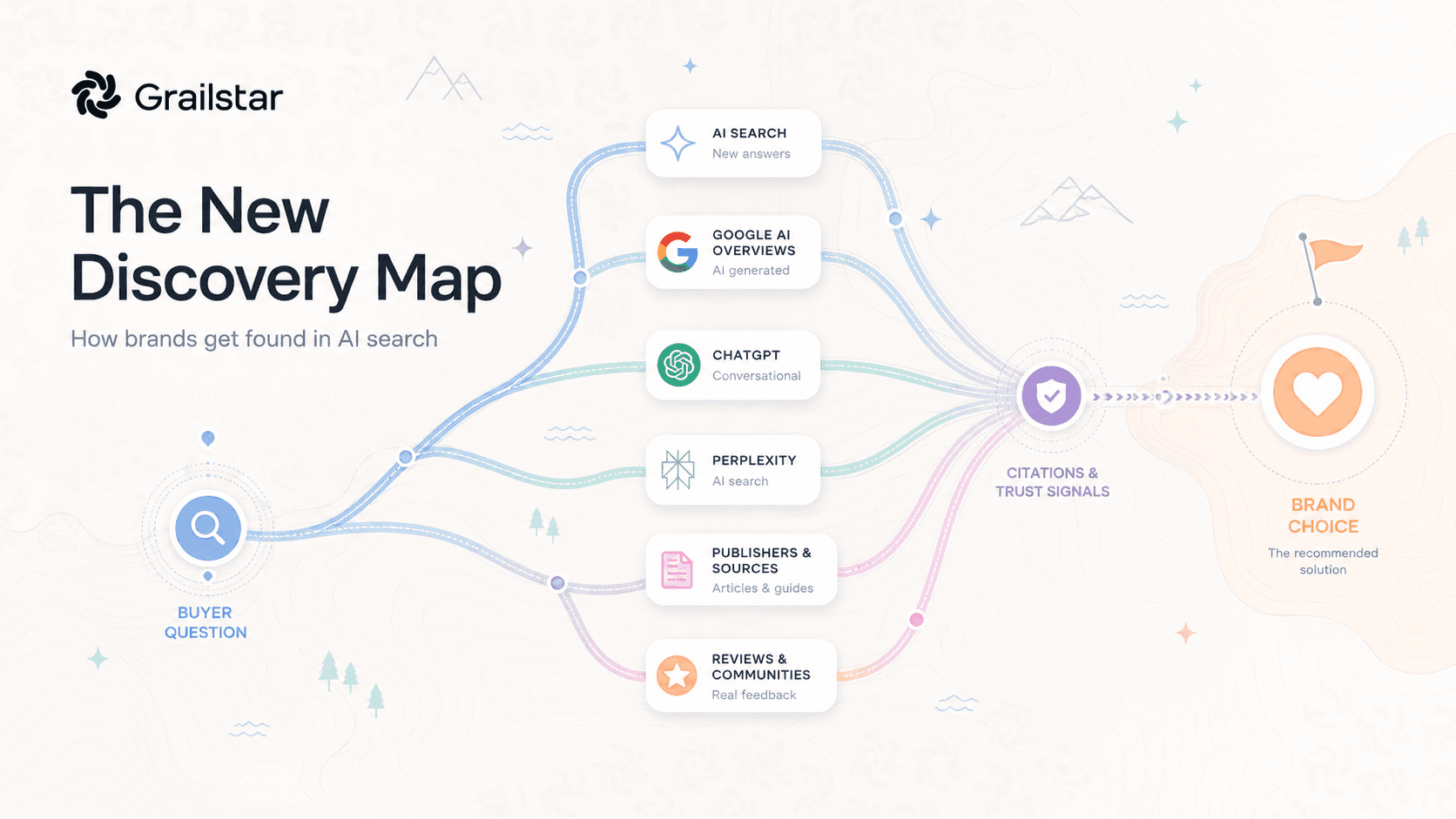
This is part of a much larger change in online discovery. As explained in AI Search Is Reshaping Discovery, customers are increasingly using AI assistants to research, compare, and choose businesses without following the traditional search journey.
What Changed Between Yelp and OpenAI?
Yelp has entered into a partnership with OpenAI that allows ChatGPT to access and surface information from Yelp when responding to relevant local searches.
The information available to ChatGPT can include:
Yelp ratings
Customer reviews
Business photos
Business categories
Addresses and service areas
Hours of operation
Phone numbers
Business descriptions
Amenities
Pricing information
Other listing details
When Yelp information appears in a ChatGPT answer, Yelp branding and links may also be displayed so users can review the original source.
OpenAI still controls how the information is organized and presented within ChatGPT. Yelp supplies the data, but it does not control every recommendation ChatGPT makes.
ChatGPT may consider Yelp information alongside a business’s website, Google Business Profile, other review platforms, directories, social profiles, local news coverage, professional associations, and additional sources found through web search.
This means Yelp is an important source, but it is only one part of your business’s overall AI visibility.
Why This Matters for Local Businesses
Local search has traditionally followed a familiar process.
A customer searches Google, looks through the map results, compares several businesses, reads reviews, visits a few websites, and then chooses whom to contact.
Conversational search compresses that process.
A potential customer can now explain exactly what they need in a single prompt:
“I need a highly rated dentist near downtown Detroit who accepts new patients, offers emergency appointments, and is known for working with anxious patients.”
Instead of opening ten different tabs, the customer may receive a short list of businesses with an explanation of why each one appears to fit.
ChatGPT may consider the customer’s location, requested service, preferences, budget, timing, and other details when forming its answer.
For certain local searches, ChatGPT can also give users direct paths to take action. A restaurant recommendation may include a clickable business name, directions, contact information, or a reservation option through a supported third-party service.
This turns AI visibility into more than a branding exercise.
A recommendation can become a direct path to:
A website visit
A phone call
A quote request
An appointment
A reservation
A store visit
A purchase
Consumers are still likely to verify what they see. They may read the original Yelp reviews, check Google, visit the business’s website, or compare several sources before making a final decision.
The businesses most likely to benefit will therefore be the ones that look credible across multiple sources, not only inside one directory.
Does Yelp Determine Which Businesses Rank in ChatGPT?
No.
It would be inaccurate to say that improving your Yelp profile will automatically make your business rank first in ChatGPT local results.
OpenAI has stated that ChatGPT Search uses multiple factors to surface information that appears relevant and reliable. There is no guaranteed formula for receiving the top placement in a recommendation.
A local answer can change depending on:
The wording of the prompt
The user’s location
The distance from the business
The requested service
The customer’s stated preferences
Review quality and relevance
Review recency
Information found on the business’s website
Business hours and availability
The sources ChatGPT accesses
The level of detail available about the business
For example, the prompt “What is the best restaurant in Detroit?” may produce a different answer from:
“What is the best quiet Italian restaurant in Detroit for an anniversary dinner?”
The second prompt contains significantly more context.
A restaurant with reviews and website content mentioning romantic dinners, quiet seating, Italian cuisine, reservations, and anniversary celebrations may be a stronger match for that request.
Businesses should stop thinking only about ranking for one broad keyword.
They must also become relevant to the detailed questions customers are asking.
This is one of the main differences between traditional search optimization and newer approaches such as Generative Engine Optimization and Answer Engine Optimization. Our guide, What Is GEO and AEO?, explains how these strategies fit into the broader AI search landscape.
Seven Things Local Businesses Should Fix Now

1. Complete Every Important Yelp Field
Begin with the basic accuracy of your Yelp profile.
Confirm that the following details are complete and current:
Business name
Primary category
Secondary categories
Address
Service area
Phone number
Website
Business hours
Holiday hours
Services
Amenities
Pricing information
Business description
Appointment or reservation options
Avoid choosing categories simply because you believe they have high search volume.
Select categories that accurately describe what customers can purchase from you.
A med spa offering Botox, fillers, laser hair removal, and skin treatments should make those services clear.
An HVAC company specializing in emergency furnace repair should not rely on a generic description such as “full-service home improvement company.”
Specific information gives customers and AI systems more context about when your business should be considered.
2. Describe Your Actual Services
Your business description should explain what you do, whom you serve, and where you operate.
Compare these two descriptions:
“Providing dependable services with excellent customer care.”
“Detroit HVAC company providing furnace repair, air-conditioning installation, seasonal maintenance, and emergency heating service for homeowners throughout Detroit, Dearborn, and surrounding communities.”
The second description is much more useful.
It identifies the industry, services, customers, and geographic area without stuffing the paragraph with unnatural keywords.
Apply the same principle to your website.
Do not place every service inside one general paragraph. Create clear pages for the services that matter most to your customers.
A dental practice might need separate pages for:
Emergency dentistry
Dental implants
Cosmetic dentistry
Teeth whitening
Invisalign
Family dentistry
Sedation dentistry
A law firm might need separate pages for each major case type.
A home-service company might need pages for emergency service, repairs, installations, maintenance, and each major service area.
These pages help customers understand your business while also giving search engines and AI systems clearer information to retrieve.
3. Make Your Website Agree With Your Listings
ChatGPT is not limited to Yelp. It can search the broader web and connect information from multiple sources.
Your website should confirm the information found on Yelp and other business profiles.
Check that your website clearly displays:
Your official business name
Address or service area
Phone number
Hours
Services
Locations
Booking or contact options
About information
Frequently asked questions
Relevant licenses
Professional credentials
Pricing or consultation information when appropriate
Major inconsistencies create uncertainty.
For example, your Yelp profile should not say that you operate until 8:00 p.m. while your website says you close at 6:00 p.m.
One profile should not describe you as serving Detroit while another says you serve only Royal Oak.
Your address, phone number, business name, service area, and hours should remain consistent wherever possible.
For multi-location businesses, create a separate website page for each real location.
Each location page should include useful, unique information such as:
The location’s address
Phone number
Hours
Available services
Staff members
Directions
Parking information
Nearby neighborhoods
Photos
Customer questions
Location-specific testimonials
Avoid creating dozens of nearly identical pages that only swap out the city name.
For a deeper look at structuring content for AI retrieval, read How to Build Content That AI Engines Can Understand, Cite, and Recommend.
4. Earn Genuine, Detailed Reviews
Businesses should never purchase reviews, create fake accounts, or pressure customers to leave only positive feedback.
Instead, build a consistent process for requesting honest reviews from real customers.
The most useful reviews often contain specific details such as:
The service purchased
The problem the customer needed solved
The location or neighborhood
The employee who helped
The speed of service
The quality of the result
A distinctive feature of the experience
Whether the customer would return
Who the service may be best for
A review saying “Great company” provides limited context.
A review explaining that a technician repaired a broken furnace during a cold Detroit evening, arrived within an hour, explained the pricing, and completed the work during the first visit provides much more information.
Businesses should not script what customers write.
However, you can ask customers to describe what service they received and what stood out about their experience.
For example, your review request might say:
“Thank you for choosing us. Would you be willing to share an honest review about the service you received and what stood out during your experience?”
This encourages detail without telling the customer what rating to leave or what opinion to express.
Review recency matters too.
A business with many positive reviews from several years ago but little recent activity may appear less relevant than a competitor receiving consistent feedback today.
Create an ongoing process rather than asking for dozens of reviews all at once.
5. Respond to Reviews Thoughtfully
Review responses are public content about your business.
Avoid copying the same response underneath every review:
“Thank you for your feedback. We appreciate your business.”
A better response acknowledges something specific from the customer’s experience:
“Thank you for trusting our team with your emergency furnace repair. We’re glad Marcus could reach your Detroit home quickly and get the system running again that evening.”
The second response reinforces useful details about the service, location, employee, and outcome.
Responses to negative reviews deserve even more care.
Do not argue with the customer or reveal private information.
Acknowledge the concern, explain the next step, and provide a reasonable way to continue the conversation privately.
For example:
“We’re sorry this experience did not meet your expectations. We would appreciate the opportunity to review what happened and speak with you directly. Please contact our office and ask for our customer care manager so we can investigate the situation.”
Helpful responses show future customers that the business is active, attentive, and accountable.
They can also provide additional context about your services and customer experience.
6. Upload Current, Useful Photos
Photos help customers understand what they can expect before they visit or book.
Upload recent images of:
Your storefront
Interior
Team
Products
Completed work
Treatment rooms
Food and drinks
Hotel rooms
Amenities
Parking
Entrances
Before-and-after results when appropriate and permitted
Choose photos that answer practical questions.
A restaurant customer may want to understand the atmosphere, seating, portion sizes, dress code, or available outdoor space.
A dental patient may want to see whether the office looks clean, modern, and comfortable.
A homeowner hiring a contractor may want to see examples of completed projects.
A hotel guest may want to see the rooms, bathrooms, parking area, lobby, pool, gym, and surrounding neighborhood.
Avoid relying exclusively on stock images.
Original photos provide stronger evidence that the business, location, team, and services are real.
Keep your photos current. Images from five years ago may no longer accurately represent the customer experience.
7. Strengthen Your Presence Beyond Yelp
The Yelp partnership should not lead businesses to neglect every other platform.
Consumers often move between AI tools, search engines, review sites, social platforms, maps, and business websites before making a decision.
Depending on your industry, important sources may include:
Google Business Profile
Apple Maps
Bing Places
Facebook
Tripadvisor
Healthgrades
Avvo
Angi
Better Business Bureau
Industry directories
Local news websites
Local chambers of commerce
Professional associations
Local tourism websites
Relevant trade publications
You do not need to be active on every website.
Focus on the sources customers actually use in your industry and region.
A restaurant may prioritize Yelp, Google, Tripadvisor, local food publications, reservation platforms, and social media.
A dentist may focus on Google, Yelp, Healthgrades, insurance directories, professional associations, and local publications.
A lawyer may need strong profiles across Google, Yelp, Avvo, legal directories, bar association pages, and relevant media coverage.
The goal is to create a consistent body of evidence about your business.
Your company should be described accurately across your website, listings, reviews, directories, and third-party mentions.
How to Test Your Business in ChatGPT Local Search
Do not test your visibility with only one broad question.
A customer’s prompt may include a location, service, budget, urgency, occasion, preference, or problem.
Your testing should reflect those variations.
Replace the bracketed text in the following prompts with your actual service and city.
General Local Prompts
What are the best [business type] businesses in [city]?
Recommend a highly rated [business type] near me.
Which [business type] in [city] has the best customer reviews?
Find a locally owned [business type] in [city].
What [business type] would you recommend for a first-time customer?
Compare the top [business type] options in [city].
Which [business type] is open right now in [city]?
Find an affordable but highly rated [business type] in [city].
Which [business type] has the most recent positive reviews?
What is the best alternative to [competitor] in [city]?
Restaurant and Hospitality Prompts
Find a restaurant in [city] for a quiet date night.
What are the best locally owned restaurants near [neighborhood]?
Recommend a restaurant with outdoor seating in [city].
Where can I make a dinner reservation for six people in [city]?
What hotel in [city] is best for a weekend trip?
Find a family-friendly restaurant with good reviews.
Which restaurant is best for an anniversary dinner?
Recommend a hotel near [landmark] with parking.
Where can I find late-night food in [city]?
Which restaurant has the best reviews for [specific dish]?
Home-Service Prompts
Find an emergency plumber serving [city].
Who is the best-rated HVAC company near me?
Recommend a roofer in [city] with strong customer reviews.
Which electrician in [city] offers emergency service?
Find a local contractor experienced with older homes.
Who repairs furnaces on weekends in [city]?
Compare the best air-conditioning installers in [city].
Find a licensed home-service company serving [neighborhood].
Which local plumber is known for transparent pricing?
Recommend a contractor for [specific project] in [city].
Healthcare and Med-Spa Prompts
Find a dentist in [city] accepting new patients.
Which dentist near me is good with anxious patients?
Recommend a med spa in [city] for first-time Botox clients.
What med spa has the best reviews for laser hair removal?
Find an emergency dentist open on Saturday.
Which local provider offers [specific treatment]?
Compare highly rated med spas in [city].
Find a dentist near [neighborhood] with convenient parking.
Which med spa is known for natural-looking results?
Recommend a local provider that explains treatment options clearly.
Legal-Service Prompts
Who is the best personal injury lawyer in [city]?
Find a local attorney offering free consultations.
Which law firm handles [specific case type] in [city]?
Recommend a highly rated small-business attorney near me.
Find a lawyer with experience handling [specific issue].
Compare personal injury firms in [city].
Which attorney is known for communicating clearly with clients?
Find a local law firm serving [neighborhood or county].
Who offers consultations outside normal business hours?
What law firm would you recommend for someone dealing with [problem]?
Run these tests periodically and record:
Whether your business appeared
Which competitors appeared
The order in which businesses appeared
The sources cited
How your business was described
Whether any information was inaccurate
Which services or attributes influenced the answer
Whether your website or Yelp profile was referenced
Whether the answer included a direct link or action
How the answer changed when you adjusted the prompt
Do not treat one test as a permanent ranking report.
Results can change based on the prompt, user context, location, available sources, and updates to ChatGPT’s search systems.
Treat testing as ongoing research.
What Businesses Should Not Do
Do not react to the Yelp and OpenAI partnership by stuffing city names and keywords into every profile.
Avoid:
Buying fake reviews
Creating duplicate listings
Publishing false locations
Asking employees to pose as customers
Copying competitors’ descriptions
Adding services you do not provide
Using identical content for every location
Creating dozens of low-quality city pages
Ignoring negative reviews
Posting misleading before-and-after images
Treating one ChatGPT answer as a permanent ranking
Repeating keywords unnaturally throughout your website
These tactics can weaken customer trust and create conflicting information across the web.
The better strategy is straightforward:
Publish accurate information, earn genuine customer feedback, explain your services clearly, and maintain a credible presence across the sources that matter.
Businesses should be cautious about anyone promising a guaranteed number-one ChatGPT ranking.
There is no single switch, directory, schema field, or GEO hack that guarantees permanent placement.
Google has issued similar warnings about trying to manipulate AI search visibility through shortcuts. You can read more in Google Just Told Marketers to Ignore GEO Hacks.
The Bigger Shift: From Keywords to Customer Questions
Traditional local SEO is not disappearing.
Businesses still need:
Crawlable websites
Accurate listings
Location pages
Service pages
Customer reviews
Internal links
Structured information
Strong technical foundations
Helpful content
What is changing is the way customers express intent.
Instead of searching only for “Detroit med spa,” someone can ask:
“I’m looking for a med spa near downtown Detroit that is good for first-time clients, has natural-looking Botox results, explains pricing clearly, and is open after work.”
That question contains:
A location
A service
A customer experience level
A desired outcome
A trust requirement
A pricing concern
A scheduling preference
A business cannot address all of that with a title tag alone.
Those details must be supported by its service pages, frequently asked questions, business listings, customer reviews, photos, policies, staff information, and third-party mentions.
The same principle applies to restaurants, hotels, contractors, dentists, law firms, and retailers.
A customer is no longer limited to typing two or three keywords. They can describe the exact experience they want.
Yelp’s integration with ChatGPT reinforces this shift.
Local visibility is increasingly built from the complete body of information available about a business, not one isolated keyword or profile.
Businesses that provide clear, detailed, consistent information will be easier for both customers and AI systems to understand.
Final Checklist
Start with these actions:
Claim and verify your Yelp profile.
Correct your categories, hours, phone number, website, and service area.
Add detailed descriptions of your real services.
Upload recent, original photos.
Create a consistent process for requesting honest customer reviews.
Respond thoughtfully to both positive and negative feedback.
Make sure your website confirms your Yelp information.
Build dedicated pages for important services and real locations.
Check major directories for conflicting information.
Improve weak or generic business descriptions.
Add useful frequently asked questions to your website.
Make contact, booking, reservation, and quote options easy to find.
Test detailed customer questions in ChatGPT.
Record which competitors receive recommendations.
Review which sources ChatGPT cites.
Correct inaccurate or outdated information.
Repeat your testing as your online presence changes.
The businesses that act early will gain a clearer understanding of how they are represented as AI-assisted local discovery grows.
They will also be better prepared as ChatGPT and other AI platforms introduce more local search, shopping, booking, advertising, and lead-generation features.
Improve Your Visibility in ChatGPT Local Results

Not sure whether ChatGPT recommends your business or your competitors?
Grailstar’s AI Local Visibility Audit evaluates how your business appears across ChatGPT local searches, which competitors receive recommendations, what sources influence the answers, and which gaps may be limiting your visibility.
The audit can help uncover:
Prompts where your business appears
Prompts where competitors appear instead
Incorrect business information
Missing services or location signals
Weak third-party visibility
Review and reputation gaps
Content opportunities
Directory inconsistencies
Sources influencing AI recommendations
Request an AI Local Visibility Audit to see how your business is currently represented and what you should fix first.